
Financial Planning and Budgeting for Perfume Startups in the UAE
Introduction: Financial Planning and Budgeting for Perfume Startups in the UAE

Financial planning and budgeting for perfume startups in the UAE is the difference between a good idea and a working business. Fragrance founders juggle bottle costs, packaging choices, product registration, payment setup, and demand generation—all while cash sits in inventory and fees nibble at margins. The fastest path to a calm, profitable launch is simple: decide your price ladder, build a budget that respects it, and keep every decision tied to what the customer actually buys.
Ertikaz coordinates the pieces so your plan holds together. Strategy defines the pricing and channel choices that make sense for your audience. Business setup secures the right structure, trade activities, and product registrations so your sales and promotions run without interruptions. Brand work turns the bottle and box into clear, bilingual product language that converts online and in-store. Marketing and e-commerce connect discovery to checkout and store pickup without friction. Financial consulting protects margins, times cash, and keeps your weekly decisions grounded. Together, that’s a launch you can manage—and grow.
Start at the Shelf Price and Work Backwards

Begin with the prices your customer will see: discovery size, core bottle, and gift set. Those three anchors shape everything else. From each retail price, work backward through target margin, wholesale expectations (if any), operating costs, and the full cost to land a sellable unit: fragrance concentrate, bottle, pump, cap, label, box, outer, compliance marks, freight, warehousing, pick/pack, and payment fees. What remains is your contribution: the money that funds marketing, rent (if you have a kiosk or shop-in-shop), salaries or contractors, and future production.
Starting with the price customers accept keeps you honest. If your math can’t support a healthy contribution at that price, you adjust early—by simplifying packaging, rethinking bottle size, or focusing the range—before orders commit your cash.
The Two-Phase Capital Map: Launch Costs vs. Working Capital
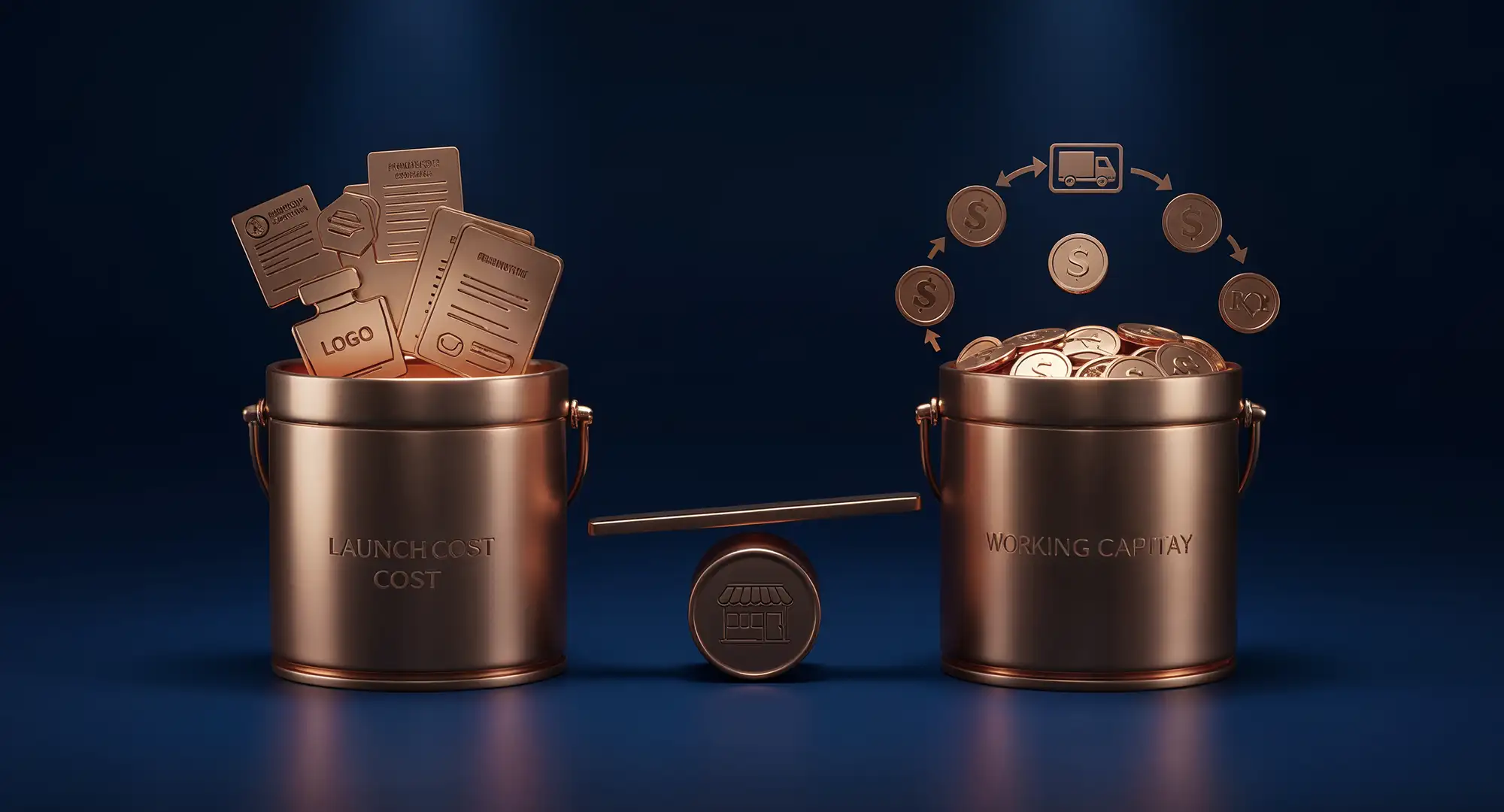
Think of your money in two buckets. The first bucket is launch costs—one-time investments you need before you sell a single bottle. The second is working capital—cash that cycles through stock, marketing, and fulfillment as you operate.
Launch costs typically include company formation, trade activity setup, product registration, initial brand identity and packaging files, essential product images and copy, storefront build (digital and/or a compact physical presence), and the first production run. Working capital covers reorders, steady media spend, marketplace fees where relevant, delivery, returns, and day-to-day operations.
Sequencing matters. For example, confirming the exact sizes and labeling requirements before you print boxes prevents costly rework. Locking payment methods early avoids scrambling the week you start taking orders. A clear sequence protects cash twice: you spend once, and you spend at the right time.
What Must Be Paid Before Day One?
A focused list keeps launch lean:
- Business structure and trade activities that cover perfume retail and online transactions
- Product registration and labeling
- Payment gateway setup and banking
- Core brand assets: name, logo lockups, color/type rules, product language in Arabic and English
- Product pages and imagery that honestly show bottle and box
- First stock of hero SKUs (often discovery size, core bottle, and a simple set)
Once these are paid and in place, every next dirham has more impact because it directly supports selling.
Licenses, Registrations, and Banking You Must Schedule

Perfume is a regulated category. Budget for the structure that matches your plan (online-only, retail, or hybrid), the trade activities that cover perfume sales, and product registrations that allow you to advertise and list without disruptions. Align timeline and fees in your plan so “paperwork slippage” doesn’t delay your launch.
Banking and payments are part of compliance and customer trust. Your gateway should accept cards and digital wallets common in the UAE, and you may choose to support cash on delivery with clear policies. Publish delivery windows you can keep and define exchanges in plain language. When these basics are tidy, marketing is smoother and support is lighter.
Ertikaz’s business setup team and financial specialists work together here: one ensures you’re allowed to trade the way you intend; the other ensures the costs and timelines are reflected in your budget.
What Each SKU Must Earn?

Every SKU has to pull its weight. For each fragrance size or set, list the all-in unit cost: materials, packaging, labeling, compliance marks, inbound freight, storage, pick/pack, and payment fees. Add a reasonable allowance for returns and damages. Compare this total to your retail price (or your wholesale if selling to partners) to see the contribution per unit.
That contribution funds demand generation and operations. If a SKU’s contribution is thin, it may still have a role—discovery sizes, for example—but you’ll limit how hard you push it in paid campaigns. The point isn’t to chase volume at all costs; it’s to build a mix where every unit sold helps the brand, not just the topline.
Your Price Ladder That Doesn’t Train Shoppers to Wait for Discounts
Use gentle, time-bound value rather than perpetual markdowns. Sets tied to seasons, refills with a modest saving, and gift wrap that truly adds to the experience maintain perceived quality while giving buyers a reason to act now. Keep list prices steady across channels to protect trust with customers and partners.
Fund the Brand Elements That Actually Move Product

Beautiful doesn’t have to mean complicated. Spend where it converts:
- A clear name and concise positioning line everyone can repeat
- Bilingual micro-copy for buttons, notices, and scent descriptions
- Accurate, honest photography of bottle and box
- Short videos that show mood and use—day, evening, gifting—without heavy effects
These assets appear everywhere: product pages, ads, shelf talkers, and partner listings. They’re the last words a shopper reads before buying, so they earn their budget.
Ertikaz’s brand team focuses on this conversion language and visual system. You won’t receive ornamental assets you can’t use; you’ll receive a toolkit that sells.
Demand Planning You Can Afford to Maintain

A steady rhythm beats a loud launch that fades. Plan simple, bilingual announcements for new drops and restocks. Keep maps and hours current if you offer testing in person. Treat performance campaigns as invitations, not interruptions: clear messages that match the mood and moment.
Set a modest monthly media envelope you can hold through slow and busy weeks alike. Shift spend between products and channels based on what’s actually selling, but avoid yo-yo budgets that confuse data. Consistency creates efficiency—both in algorithms and in human attention.
If you want your demand plan sized to your range and cash cycle, ask Ertikaz to review your current spend and propose a calm, sustainable cadence that pays for itself.
Payments, Delivery, and Exchanges That Prevent Leakage
Revenue leaks when buyers hesitate at checkout or returns spiral. Budget for trusted payment options and a delivery promise you can keep. Communicate once the order ships and once it’s close. Make exchanges for gifts straightforward and fast. Many “marketing problems” vanish when the purchase and post-purchase experience feel respectful and predictable.
Inventory Rhythm: Order Sizes, Reorder Triggers, and Cash Timing

Work backward from key moments: festive gifting, payday weekends, and planned promotions. Order conservatively for slow lanes and generously for proven heroes. Keep a small safety stock for your top SKUs; set reorder triggers based on actual weekly sell-through. Tie purchase orders to the payment cycles of gateways and marketplaces so your cash outflow doesn’t land before your inflow.
A simple rule helps: invest the most where certainty is highest. If a fragrance reliably moves each week, stock it with confidence. If something is new or seasonal, cap its risk until proof arrives.
Channel Mix Without Budget Drift

Every channel has a cost pattern. Your own store concentrates spend in content, media, and fulfillment. A kiosk or shop-in-shop adds rent and staffing but may reduce returns because shoppers test on skin. Marketplaces add fees and payment cycles, while a distributor reduces cash demands but requires wholesale pricing and clear support terms.
Choose the two channels that match your stage and audience. Keep pricing aligned so no route undermines another. Use marketplaces to introduce new buyers, then encourage direct reorders where you can offer refills, gift wrap, or early access to sets without undercutting partners. Let your channel plan serve the budget—not the other way around.
Weekly Numbers for Founders (One Page, Not a Dashboard Jungle)

Check five things at the same time each week:
- Units available for your top SKUs
- Orders by channel and average order value
- Media spend vs. revenue for the week
- Most common customer questions or objections
- Cash position and upcoming payables/receivables
Decide three actions: scale what pays, fix what confuses, pause what drags. That’s it. Complexity hides truth; a one-page view keeps you in control.
Calm Contingencies: Buffers for the Real World

Set a modest reserve for packaging delays, freight variance, and seasonal returns. Keep a small emergency plan for an unexpected hero product (so you can reorder fast) and for a slow mover (so you can bundle without harming perception). Buffers aren’t waste; they are the price of staying decisive when conditions shift.
Funding Paths That Match Your Pace

Bootstrapping gives control but limits speed. Selective investor capital buys time and inventory but expects discipline and reporting. Credit tools can smooth cash cycles if your margin and velocity justify them. Match funding to your unit economics, not your wish list. The right money source is the one you can service comfortably while maintaining brand quality and delivery promises.
Ertikaz’s financial team models scenarios so you see the impact of each option on cash and control before you commit.
How Ertikaz Turns a Cost List into a Revenue Plan?
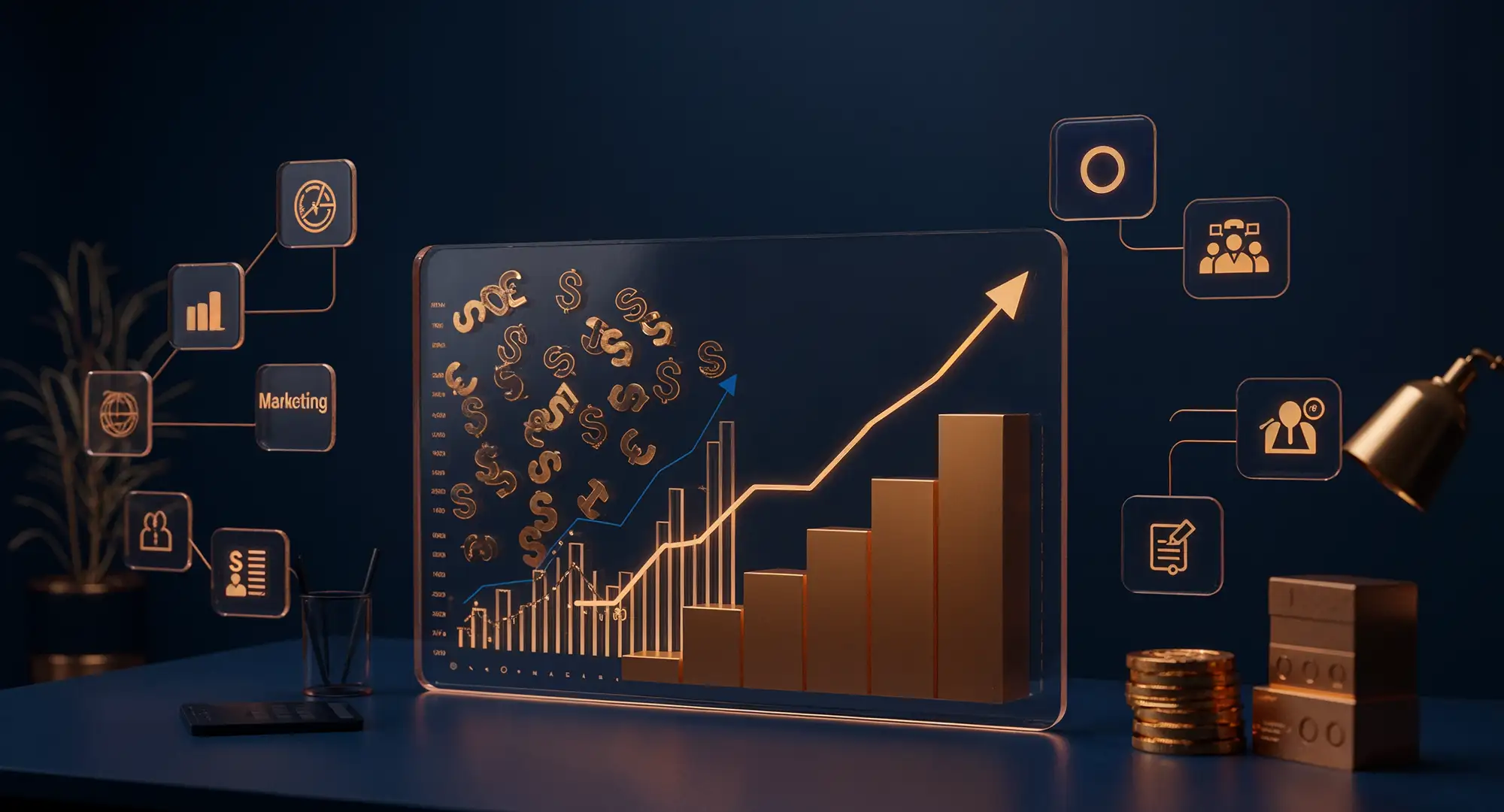
Ertikaz aligns the whole picture. Strategy locks your price ladder and channel focus to how buyers actually choose. Business setup secures licenses, registrations, and payment readiness so promotions and listings remain live. Brand work creates the bilingual product language and visuals that convert, online and in-store. Marketing and e-commerce build your storefront, connect payments and delivery, and run a steady demand cadence sized to your budget. Financial consulting maps launch costs and working capital, sets reporting you’ll actually use, and keeps the plan honest as you grow. One partner, one plan, fewer surprises.
Conclusion: Financial Planning and Budgeting for Perfume Startups in the UAE

Financial planning and budgeting for perfume startups in the UAE isn’t about spreadsheets for their own sake; it’s about protecting margin, timing cash, and funding only what moves product. Start from shelf price, build a mix each SKU can support, and keep demand steady enough that inventory and payments move in step. If you want a grounded plan—pricing, compliance, brand assets, store build, channels, and weekly reporting organized into one program—speak with Ertikaz. We’ll align the numbers with the reality of how fragrance sells here and help you launch with confidence.
Frequently Asked Questions
Prioritize sellable stock and the minimum set of assets that convert: bilingual product language, honest photography, and a clean store. Overbuilding brand visuals early slows launch and traps cash; upgrade once sell-through proves which SKUs deserve more investment.
Treat minis as trial, not margin engines. Price them to cover cost and a small contribution, then measure how many convert to full bottles. If conversion is strong, keep them in the spotlight; if not, reserve them for campaigns and bundles.
Pick a number you can sustain for six months and resist large swings. Many founders anchor to a modest percentage of monthly revenue or a fixed amount sized to their cash cycle. Focus spend on your top SKUs and moments when buyers are most receptive.
Map the settlement timelines into your cash plan and place purchase orders with those dates in mind. Keep a small buffer so a late payout doesn’t force you into expensive rush decisions. If cash strain appears, slow lower-velocity SKUs and protect heroes.
Add a kiosk or shop-in-shop when testing on skin will accelerate conversion and your cash can support rent and staffing. Keep the footprint modest and the messaging identical to your online store so buyers never have to relearn the brand.
Meet our valuable clients





Turning Brand Dreams Into Reality
Contact us today to discover how we can help you achieve your goals.